

Compliance Can't Wait a Minute: Introducing Blockaid Risk Exposure
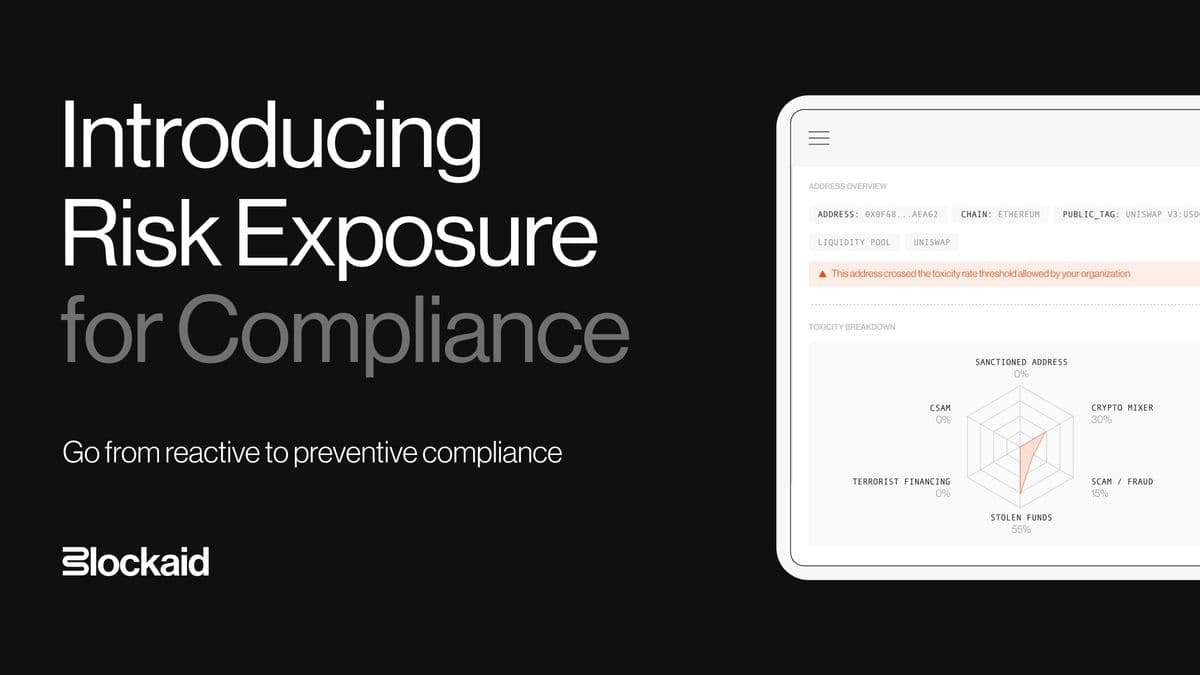
For nearly 15 years, the dominant approach to blockchain compliance has followed the same playbook: Something bad happens onchain. Analysts investigate. Addresses get tagged and databases get updated — sometimes days or weeks later. By then, illicit funds have moved, been mixed, and require even more analysts to trace.
Today, we're announcing Blockaid Risk Exposure — a real-time compliance suite that lets organizations monitor addresses, transactions, and act programmatically the moment a risk threshold is crossed. Risk Exposure uses Blockaid’s proprietary security and scam intelligence to deliver a strong compliance posture for onchain operations at any scale.
Why the Old Model Is Broken
Today, billions of dollars of assets move onchain daily. Exploits unfold in minutes, stolen funds hit mixers soon thereafter, and AI makes hyper-personalized investment scams possible at scale. But existing compliance tools weren’t built to identify malicious behaviors that indicate imminent theft nor refresh exposure data after every validated block.
Stale compliance data creates two major pain points for companies:
- Greater risk of losses, fines, or legal headaches
- Productivity losses for product, security and engineering teams caught up in reactive compliance workflows
Companies can no longer afford to wait for fresh data. To satisfy regulators and build trust with the next billion blockchain users, KYT, AML, CTF, BSA, and policies for sanctioned entities, illicit funds, risky counterparties, and scammers should be enforced in real-time.
What Blockaid’s Risk Exposure Does
Other tools update compliance exposure data after a breach or exploit has already happened. Blockaid’s Risk Exposure solution is fundamentally built to monitor configurable compliance thresholds preemptively and continually based on address behavior and intelligence gathered onchain and offchain.
Risk Exposure extends Blockaid’s security platform in three ways to address different compliance needs:
1. Inflows:
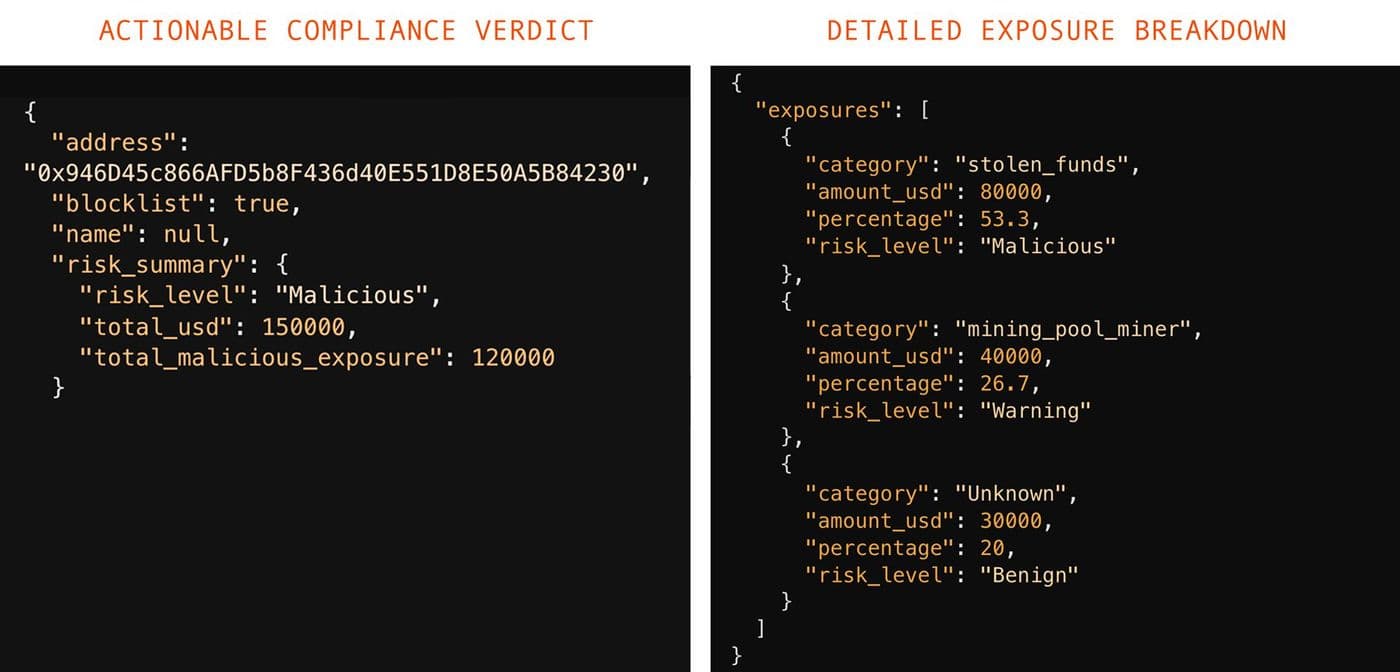
Risk Screening API. Before accepting funds, you need to validate the compliance status of the depositor. Blockaid’s API screens transaction flows in real-time — over 100 reads per second — and returns a structured verdict your team can act on and document.
Every response includes a top-level signal (Benign, Warning, or Malicious) with a full exposure breakdown behind it: $80,000 in stolen funds at 53.3% of the transaction value. $40,000 linked to mining pool activity at 26.7%. The kind of output that holds up to the scrutiny of internal and external auditors, SAR filings, or regulator conversations.
2. Outflows:
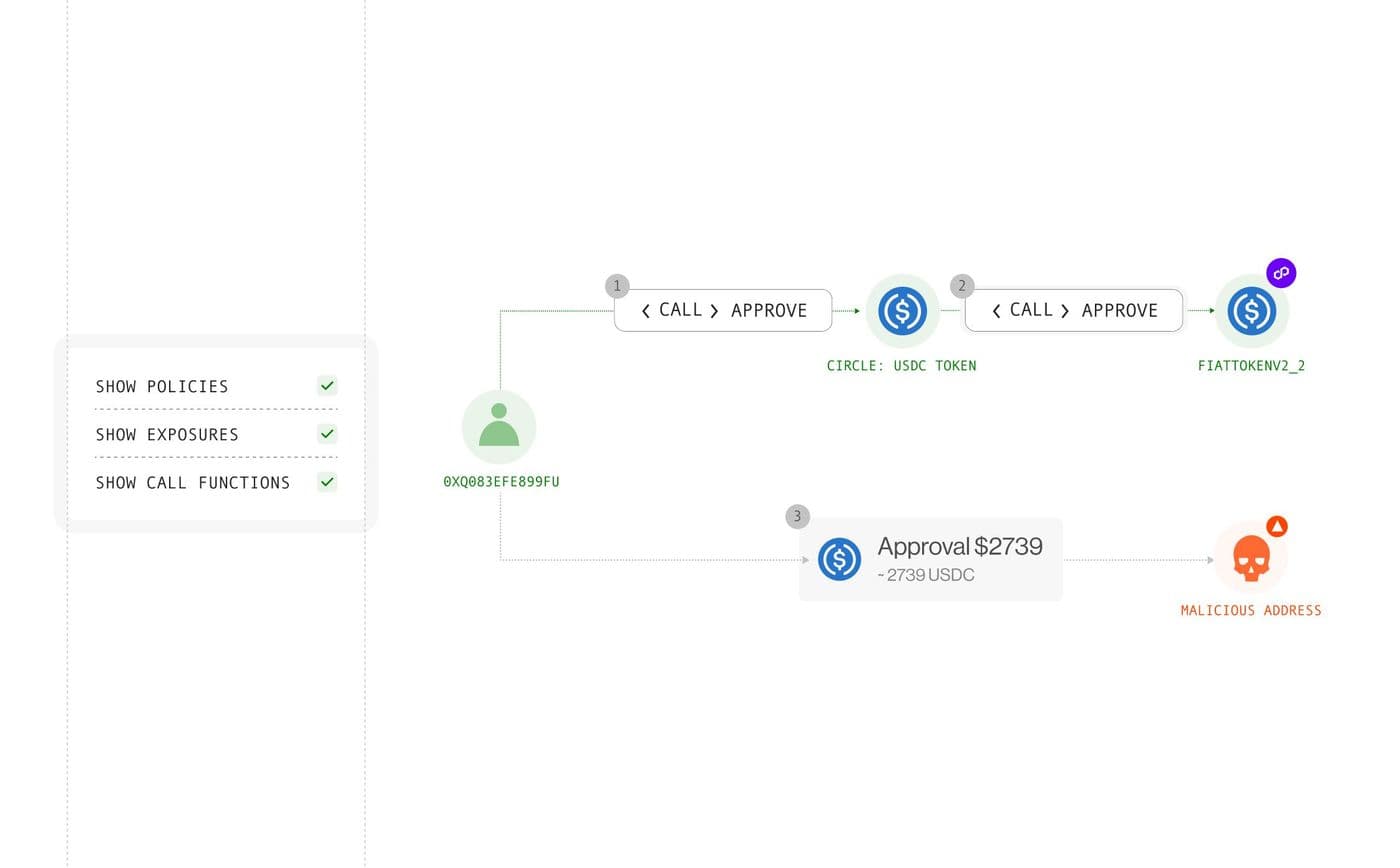
Cosigner Policy Engine. Blockaid’s Cosigner is already crypto’s institutional security leader. We’ve taken its Policy Engine a step further by letting you set compliance exposure thresholds as policy and enforce them automatically within your existing multisig workflow.
This offering goes beyond address whitelisting or blacklisting: it dynamically assesses real-time compliance exposure across all gaining addresses in a transaction, not just the counterparty. If a transaction breaches your AML exposure limit, Cosigner rejects it — even if every multisig approval was granted. Say goodbye to static policy management, blind signing and post-transaction investigations.
3. During Asset Custody:
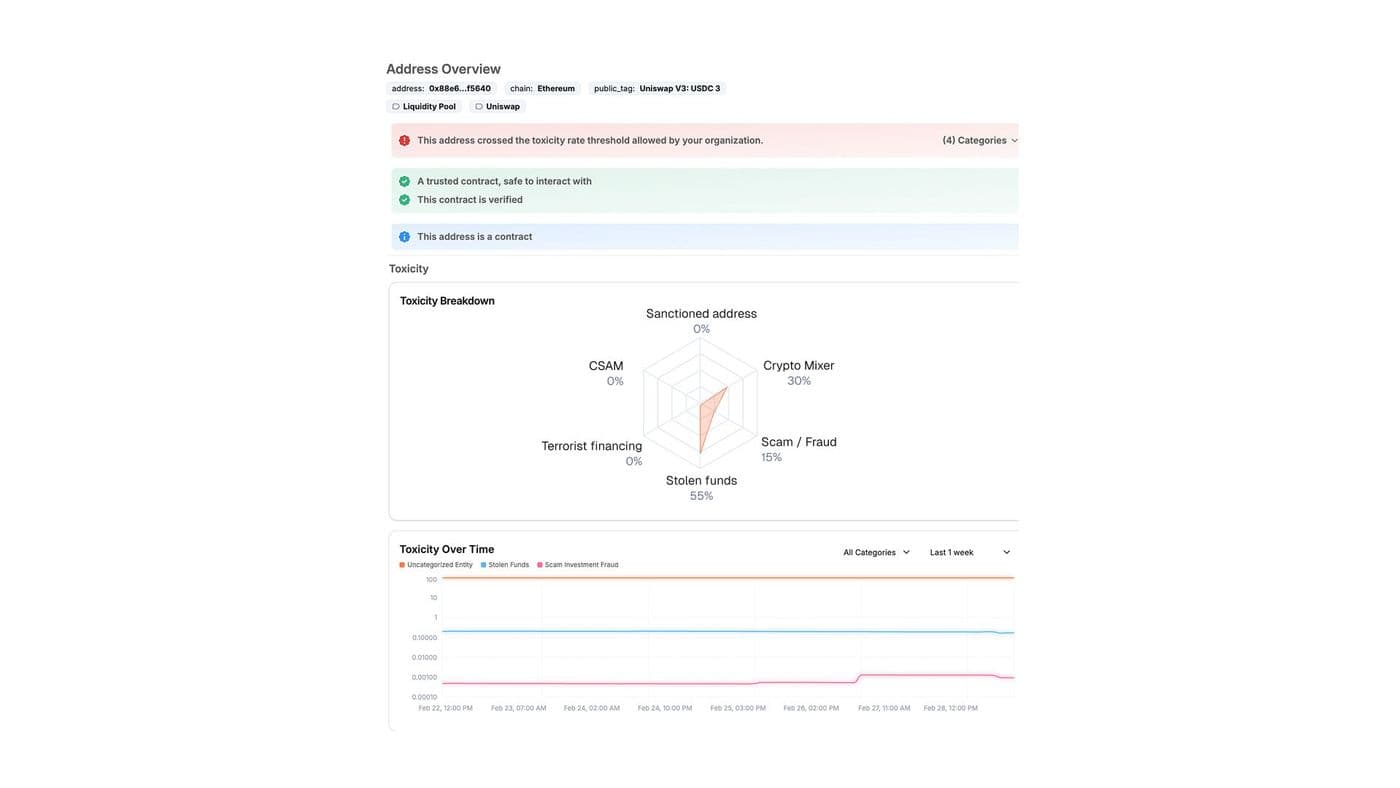
DeFi Toxicity Monitors. When you operate onchain, risk exposure doesn’t just come from direct transactions. If you’re providing liquidity, holding a position, or operating in a DeFi ecosystem, your exposure changes as the pools and protocols around you change – even when you’re not actively transacting.
Toxicity Monitors provide continuous risk surveillance across DeFi environments, sampling exposures continually and generating alerts when defined thresholds are breached. For asset managers, market makers, and protocols with LP exposure, it's the equivalent of ongoing due diligence — running continually, without a manual process behind it.
Built for an in-line Compliance Stack
One of the problems with how compliance tools have historically been designed is that they target a single user persona: the compliance analyst. The result is tooling that's heavy on investigation UI and light on developer-facing APIs, which means engineering teams end up building glue code just to operationalize compliance requirements into applications and transaction flows.
Risk Exposure was designed differently. Our API responses map directly to the policies your compliance team wants to enforce — sanctions always block, mixers above threshold X go to manual review, fraud triggers a warning and logs a case. No engineering translation layer required.
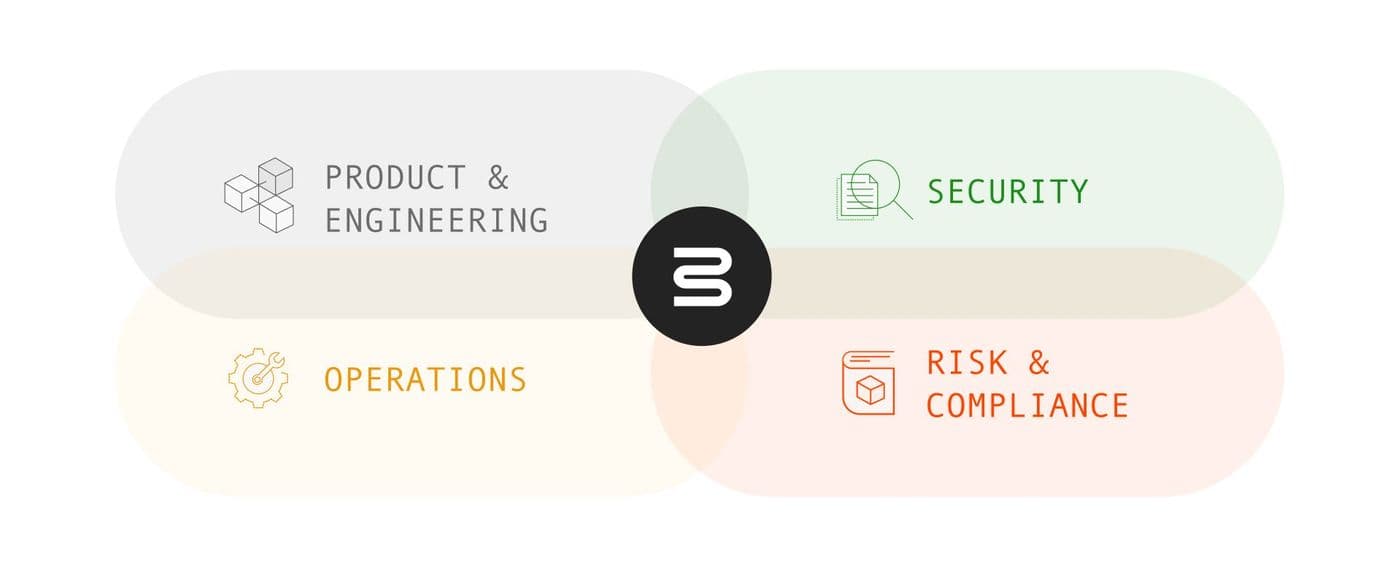
That also means Risk Exposure serves the entire organization. Product and Engineering teams get a clean API with application-grade latency and high throughput. Security Operations or Platform Engineering teams get continuous protocol monitoring, incident alerting and onchain response workflows. Risk and compliance teams get structured, audit-ready evidence with category breakdowns, USD exposure amounts, and final verdicts that satisfy regulatory defensibility requirements.
Who This Is For
Risk Exposure is built for organizations that operate at the intersection of crypto and regulatory obligation.
- Regulated exchanges and custodians can meet AML and KYT requirements using a modern, API-first tool rather than retrofitting legacy compliance platforms that weren't designed for high-throughput onchain operations.
- DeFi protocols and bridges can monitor treasury operations, liquidity pools, inflows and outflows for counterparty compliance, eliminating toxic funds and maintaining trust throughout the ecosystem.
- Asset managers, hedge funds, market makers, and OTC desks can screen counterparties in real time before a trade executes, satisfying the compliance requirements that come with institutional crypto operations.
- Payment processors and banks adding digital assets and crypto services can scale onchain operations while meeting the address-level compliance standards regulators and customers expect.
The Data Advantage No One Else Has
Here's what makes Blockaid’s Risk Exposure structurally different from every other compliance tool: it's powered by a security-first data foundation that standalone compliance vendors can’t replicate.
Blockaid screens more than 500 million transactions per month for the world's leading wallets, custodians, exchanges, and protocols — including Coinbase, MetaMask, Uniswap, Kraken, Fireblocks, Safe and many more. Each screening action involves behavior-based simulation of the proposed transaction to identify all gaining addresses, and to estimate the likelihood of malice or fraud, all done within 300 milliseconds This gives us intent signals on fraud, scams, drainers, and illicit actors — before a transaction is signed —that no other vendor has visibility into. And each transaction screen helps our detection algorithms improve; a virtuous cycle at industry-leading scale.
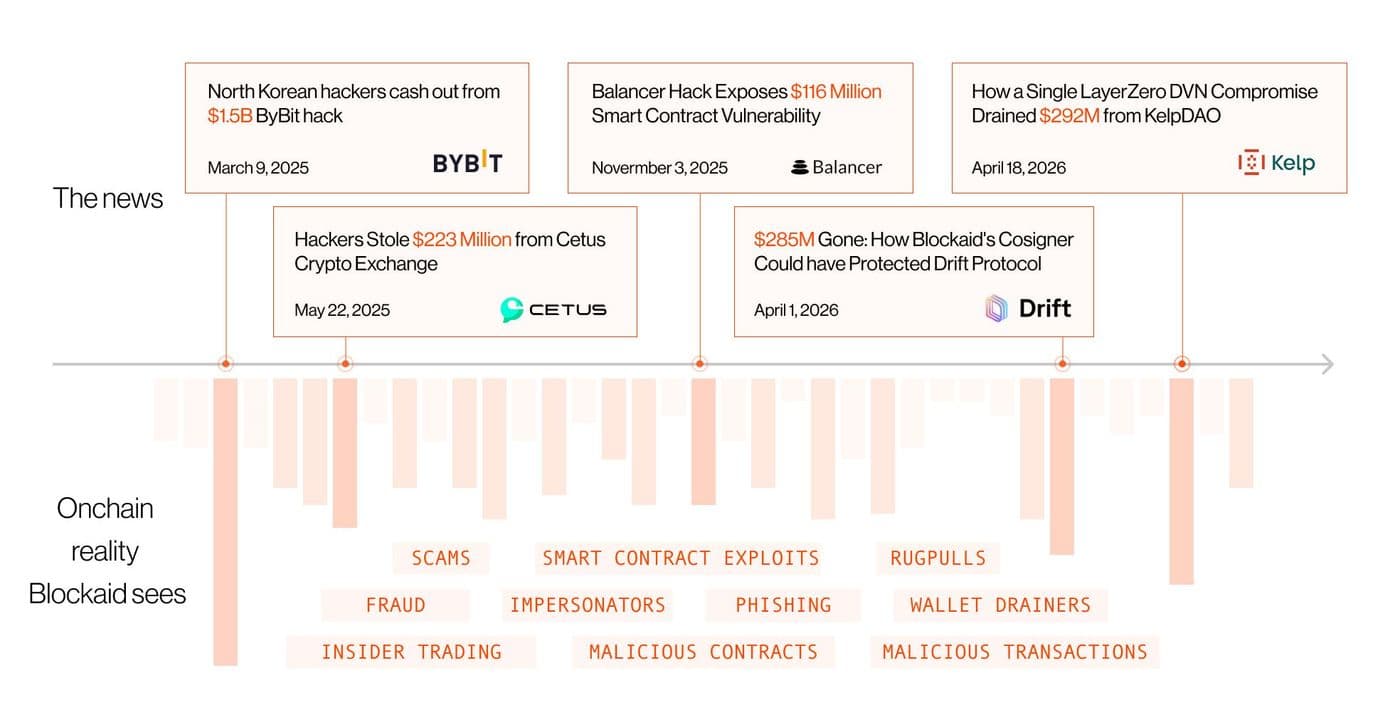
When Blockaid's exploit detection system identifies pre-attack signals, those addresses are immediately tagged in our Risk Exposure data model.
When our AI agents discover a new phishing campaign or fake investment website, we extract those malicious addresses and update our compliance data model.
The result is real-time compliance data on stolen funds, scams, fraud, illicit funds, and sanctioned entities reflecting the current state of the blockchain — not last week's state, not two hours ago.
This is the difference between knowing an address was an accomplice in the KelpDao hack before you receive funds from it versus finding out after you've already processed a deposit and made payments.
A Different Vision for Compliance
The legacy compliance vendors built a world where compliance is something you report on — a trail of evidence that documents what happened and who was involved. That model made sense for forensic investigation and law enforcement coordination. It still has a role to play.
But for organizations that need to make real-time decisions at the speed of the blockchain — approving a deposit, blocking a transaction, or flagging LP exposure — a platform built primarily for investigation simply doesn't fit the operational reality.
Blockaid’s Risk Exposure is built around a different premise: compliance should be something you act on, not something you document after the fact. Real-time verdicts. Pre-execution enforcement. Continuous monitoring. Policy-ready outputs that plug directly into your approval workflows.
Onchain compliance you can actually use, at the speed onchain operations demand.
Ready to see what real-time compliance looks like? Learn more about Blockaid's Risk Exposure: blockaid.io/compliance
Blockaid is securing the biggest companies operating onchain
Get in touch to learn how Blockaid helps teams secure their infrastructure, operations, and users.
Related Posts
Blockaid Brings Onchain Monitoring and Cosigner to Concrete's Vault Infrastructure
Blockaid Partners with LayerZero to Bring Security Verification to Cross-Chain Bridging Transactions
.webp&w=1920&q=75)